-
 play_arrow
PUKfm
-
 play_arrow
London Calling Podcast Yana Bolder
-
 play_arrow
Summer Festival Podcast Robot Heart
-
 play_arrow
Electronic Trends Podcast Aaron Mills
-
 play_arrow
New Year Eve Podcast Robot Heart
-
 play_arrow
Techno Podcast Robot Heart
-
 play_arrow
Flower Power Festival Podcast Robot Heart
-
 play_arrow
Tech House Podcast Robot Heart
-
 play_arrow
Winter Festival Podcast Robot Heart
music_note


THE BRIEF HISTORY OF CHRISTMAS
Megan Grobler
megan.gro_bler
Have you ever wondered how the Christmas we know today came to be? How Santa Claus, Christmas trees, festive meals and worldwide cheer became associated with the holiday season?
While modern Christmas is often characterised by warmth and celebration, its origins are far more complex. Across history, different cultures marked midwinter in vastly different ways, many of which predate Christianity and influenced the traditions we now associate with Christmas.
Early Winter Celebrations
Long before Christmas was established as a Christian holiday, midwinter in the Northern Hemisphere was marked by festivals in many parts of the world. These celebrations existed centuries before Christmas was formally recognised in the 4th century AD.
Scandinavia and Yule
In Scandinavia, Norse communities observed Yule, a midwinter festival linked to the winter solstice, usually occurring around 21 December. Yule predates Christianity and was celebrated by Germanic and Norse peoples as a way to mark survival through winter and the gradual return of longer days.
Celebrations involved feasting and burning large logs. The Norse believed that sparks from the fire symbolised future livestock births, reflecting hopes for prosperity in the coming year. As Christianity spread through Northern Europe, many Yule customs were absorbed into Christmas traditions, including evergreen decorations and communal feasting.
Ultimately, for the Norse, this period was about endurance, renewal and the continuation of life.
Germany
In parts of what is now Germany, pagan traditions centred around the god Odin (also known as Woden). According to folklore, Odin was believed to travel through the night sky during the winter period, observing humanity and determining fate. This belief is often cited as one of the mythological influences behind later depictions of a flying gift-bringer.
Rome
In ancient Rome, winter celebrations took a different form. Saturnalia, a festival honouring Saturn, the god of agriculture, was marked by feasting, gift-giving and social role reversals. The Romans also celebrated Juvenalia, which honoured children, and Dies Natalis Solis Invicti, a festival dedicated to the “Unconquered Sun.”
These celebrations occurred in late December and contributed to the timing and structure of later Christmas observances.
Where Did Santa Claus Come From?
The figure known today as Santa Claus has evolved across cultures. His roots can be traced to Saint Nicholas, a 4th-century Christian bishop known for charitable acts. Over time, this figure merged with local folklore and traditions.
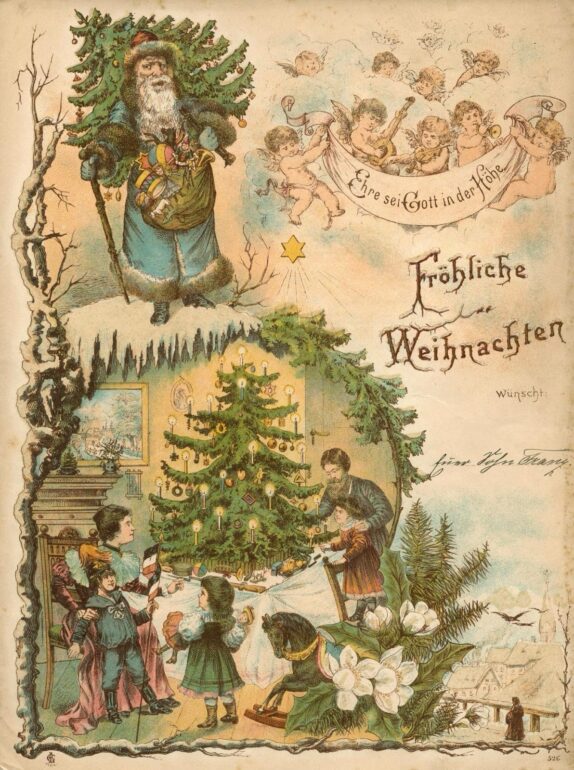
In Northern Europe, elements of Odin’s mythology influenced the development of gift-bringing legends. Dutch settlers later brought the figure of Sinterklaas to America, where he eventually transformed into Santa Claus.
Who Is Krampus?
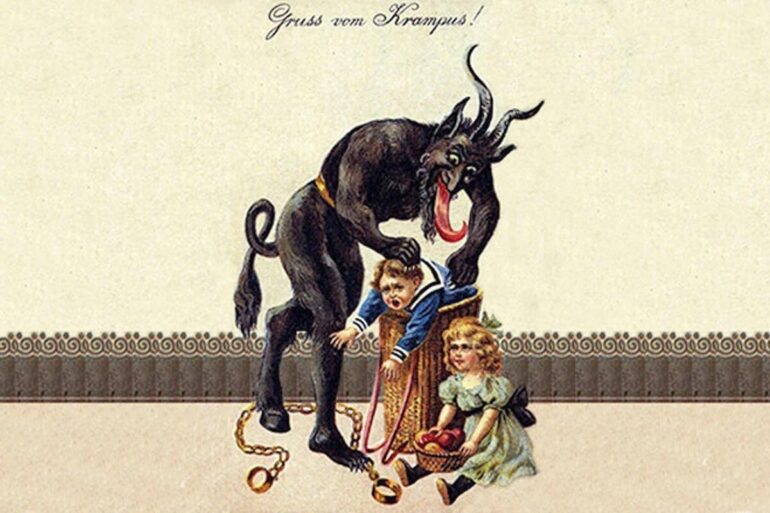
In Alpine regions of Europe, particularly in Austria and Bavaria, folklore introduced Krampus, a horned figure said to punish misbehaving children. Krampus is traditionally depicted as the dark counterpart to Saint Nicholas.
The celebration of Krampusnacht, held on 5 December, remains part of cultural tradition in some European regions today.
The Ban on Christmas
Christmas was not always universally accepted. Between 1647 and 1660, Christmas celebrations were banned in England under the rule of Oliver Cromwell and the Puritan government. The ban stemmed from religious objections, as Christmas was viewed by some Protestants as having pagan and Catholic associations not supported by biblical scripture.
Public resistance was common, but the ban was lifted following the Restoration of the monarchy in 1660.
A Brighter Christmas
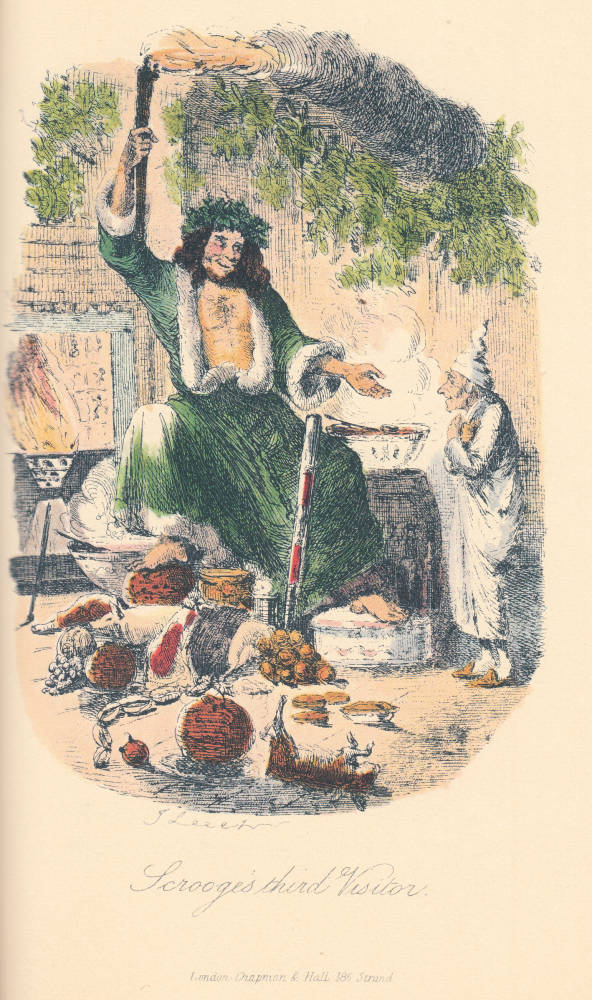
In the 19th century, Christmas began to take on a more familiar and family-focused form. Charles Dickens’ A Christmas Carol (1843) helped popularise themes of generosity, compassion and goodwill. These values resonated strongly in both British and American cultures.
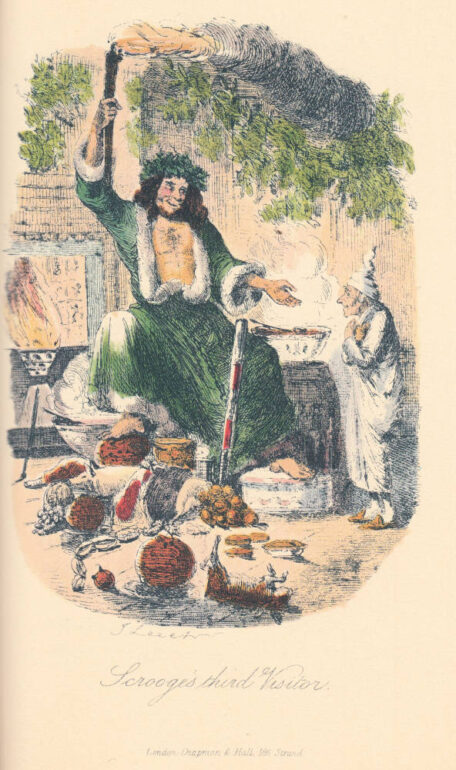
As Christmas traditions spread, some older customs faded, while others remained, including gift-giving, decorating trees and sending greeting cards.
What Is Christmas Today?
In the modern age, Christmas is a Christian holy day to most, that commemorates the birth of Jesus Christ. While modern celebrations often focus on gifts, decorations and festivities, the holiday continues to centre on themes of family, reflection and togetherness.
Though shaped by centuries of cultural evolution, Christmas today reflects a blend of ancient traditions and religious meaning that has endured across generations.
Edited by Simoné de Witt

Chart
-
-
-
 play_arrow
I Had Some Help (feat. Morgan Wallen) Post Malone
-
-
-
 play_arrow
Not Like Us Kendrick Lamar
-
-
Top popular

VARSITY CUP TICKET RESELLERS AND BUYERS – MAY BE DENIED ACCESS

UNANSWERED AND UNSPOKEN: NWU’S SILENCE ON SUSPENSION OF SCC STUDENT LEADER

NWU EXPELS STUDENT LEADER AFTER INTERNAL FINDING OF SEXUAL MISCONDUCT

MARCHING FOR JUSTICE AND POLICE ACCOUNTABILITY: THE TRUTH BEHIND THE TMM LOFTS PROTEST

DEGENAAR PRAAT OOR DIE NA-SKOK VAN ‘N TRAGEDIE

Post comments (0)