-
 play_arrow
PUKfm
-
 play_arrow
London Calling Podcast Yana Bolder
-
 play_arrow
Summer Festival Podcast Robot Heart
-
 play_arrow
Electronic Trends Podcast Aaron Mills
-
 play_arrow
New Year Eve Podcast Robot Heart
-
 play_arrow
Techno Podcast Robot Heart
-
 play_arrow
Flower Power Festival Podcast Robot Heart
-
 play_arrow
Tech House Podcast Robot Heart
-
 play_arrow
Winter Festival Podcast Robot Heart
music_note


VALENTINE’S DAY: THE PRICE OF ROMANCE

Simoné de Witt
@simone_de_witt
Each year on 14 February, millions of people around the world celebrate Valentine’s Day. This day is devoted to expressing love, affection, and appreciation, however, while it is associated with chocolates, roses, and romantic dinners in the modern era, the history of Valentine’s Day is far richer and more complex than its more recent, commercial image.
According to National Geographic, Valentine’s Day traces its origins back to both ancient Roman traditions and early Christian martyrdoms. Some historians connect the date to the Roman festival of Lupercalia, celebrated around mid-February, which involved fertility rites and rituals intended to ensure health and fertility in the coming year. Scholars suggest the early Church may have chosen February 14 to provide a Christian alternative to these pagan celebrations.
Central to the Valentine’s Day narrative is the figure of Saint Valentine, a Christian priest or bishop in third-century Rome. According to legend, he defied Emperor Claudio II’s ban on soldier marriages, imposed to keep troops focused on warfare, by secretly performing weddings for young couples in love. For this act of defiance, Valentine was arrested and eventually executed on 14 February 273 AD.
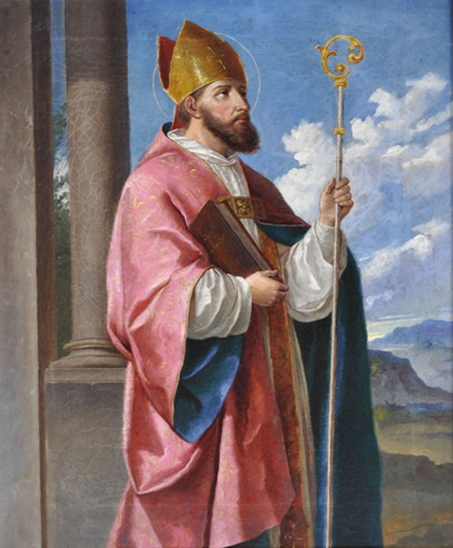
Over time, Saint Valentine’s Day shifted from strictly religious rituals to a wider celebration of romantic love. Today, Valentine’s Day is celebrated in many countries around the world. In some places, it is also adapted to celebrate friendship and platonic love, not just romantic relationships. When interviewed about what they do on Valentine’s Day, the person, whose identity is known to Wapad, says, “I buy my mom flowers and make her breakfast in bed. Then I wish my friends ‘Happy Valentine’s Day’. It doesn’t need to be complicated. They know I love them”.
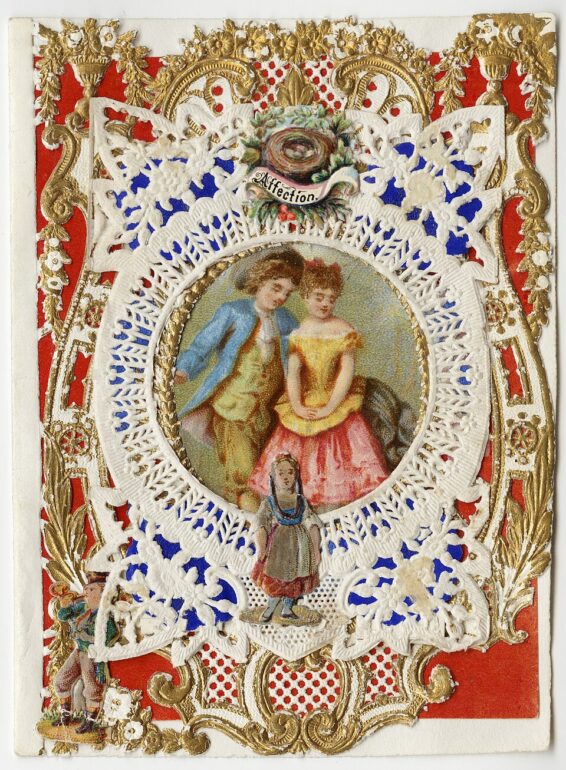
But while the origins of Valentine’s Day are rooted in religion and folklore, its evolution into a commercial holiday is largely thanks to modern marketing and consumerism. The commercialisation of Valentine’s Day began in the 19th century, when advances in printing made it easier and cheaper to produce greeting cards. According to Snopes, Esther A. Howland is often credited with popularising Valentine’s Day cards, by selling elaborately decorated mass-produced versions in the 1840s and 1850s. These cards made exchanging valentines accessible to a broader public. By the early 20th century, companies like Hallmark had begun selling Valentine’s cards commercially. Hallmark’s large-scale production and distribution contributed significantly to the holiday’s association with gift giving. Naturally, with the influence of the company’s success, this practice soon spread all over the world.
Confectioners and florists also played a key role in shaping the holiday’s modern image. According to Census.gov, in 1868, British chocolatier Richard Cadbury introduced heart-shaped boxes of chocolates decorated with romantic motifs. This became a marketing innovation that linked chocolate with love and Valentine’s Day. Industrial advances in the 19th and early 20th centuries made chocolates and sweets more affordable and widely available. Over time, chocolates, candies, and sweets became staple Valentine’s gifts, a trend that persists today. Florists, too, capitalised on the occasion. Valentine’s Day is now one of the busiest days of the year for selling roses, particularly red ones, which have become symbolic of romantic passion through sustained marketing efforts.
Modern marketing around Valentine’s Day extends far beyond cards and flowers. Restaurants, hotels, and wine producers promote special menus and romantic getaway packages timed around 14 February. Jewellers release Valentine’s collections emphasizing engagement rings and luxury gifts marketed as “forever” tokens of love. Retailers and fashion brands also use Valentine’s Day to launch targeted promotions on clothing, accessories, and cosmetics, and often frames these items as “essential” for celebrating the holiday.
Even grocery stores placed their hat in the ring, with some South African stores putting up their decorations as early as mid-January. When interviewed about their take on Valentine’s Day, the person, whose identity is known to Wapad, comments, “I swear I started seeing Valentine’s Day decorations right after Christmas was over”.
Now, in the early 21st century, Valentine’s Day marketing shifted significantly online. Companies use social media campaigns, influencer partnerships, and e-commerce promotions to engage consumers and drive buying behaviour around romantic themes. Digital valentines and online campaigns have expanded the holiday’s reach, especially among younger consumers.
A trend on TikTok uses the idea of a “bae basket” to push this overconsumption narrative. A “bae basket”, according to Hitched.com, is a customisable gift basket, usually themed, for a significant other. These baskets can be filled with the person’s favourite snacks, cozy items like slippers, and sentimental trinkets. However, these baskets had quickly become a symbol of luxury, with influencers packaging their “bae baskets” with expensive gifts. These baskets had become unrealistic and unaffordable, and much like Valentine’s Day itself, their meaning has been lost to overconsumption.
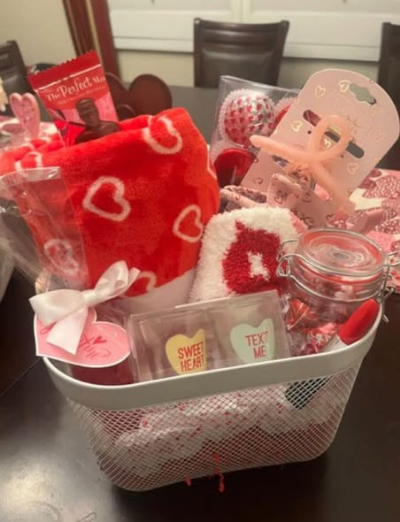
Today, we are pressured to “go big or go home” with Valentine’s Day. We are expected to spend an insane amount of money on our loved ones to show our love and appreciation, but this is not sustainable or realistic. Love should not be measured with how many red roses you give, or how much money you spend. Spend time with your family, your friends, and even yourself on the day of love. Or you can do nothing on 14 February, because you have the other 364 days of the year to show your love anyway.
Edited by Mhlengi Khumalo


Chart
-
-
-
 play_arrow
I Had Some Help (feat. Morgan Wallen) Post Malone
-
-
-
 play_arrow
Not Like Us Kendrick Lamar
-
-
Top popular
VARSITY CUP TICKET RESELLERS AND BUYERS – MAY BE DENIED ACCESS

UNANSWERED AND UNSPOKEN: NWU’S SILENCE ON SUSPENSION OF SCC STUDENT LEADER

NWU EXPELS STUDENT LEADER AFTER INTERNAL FINDING OF SEXUAL MISCONDUCT

MARCHING FOR JUSTICE AND POLICE ACCOUNTABILITY: THE TRUTH BEHIND THE TMM LOFTS PROTEST

DEGENAAR PRAAT OOR DIE NA-SKOK VAN ‘N TRAGEDIE

Post comments (0)