-
 play_arrow
PUKfm
-
 play_arrow
London Calling Podcast Yana Bolder
-
 play_arrow
Summer Festival Podcast Robot Heart
-
 play_arrow
Electronic Trends Podcast Aaron Mills
-
 play_arrow
New Year Eve Podcast Robot Heart
-
 play_arrow
Techno Podcast Robot Heart
-
 play_arrow
Flower Power Festival Podcast Robot Heart
-
 play_arrow
Tech House Podcast Robot Heart
-
 play_arrow
Winter Festival Podcast Robot Heart
music_note


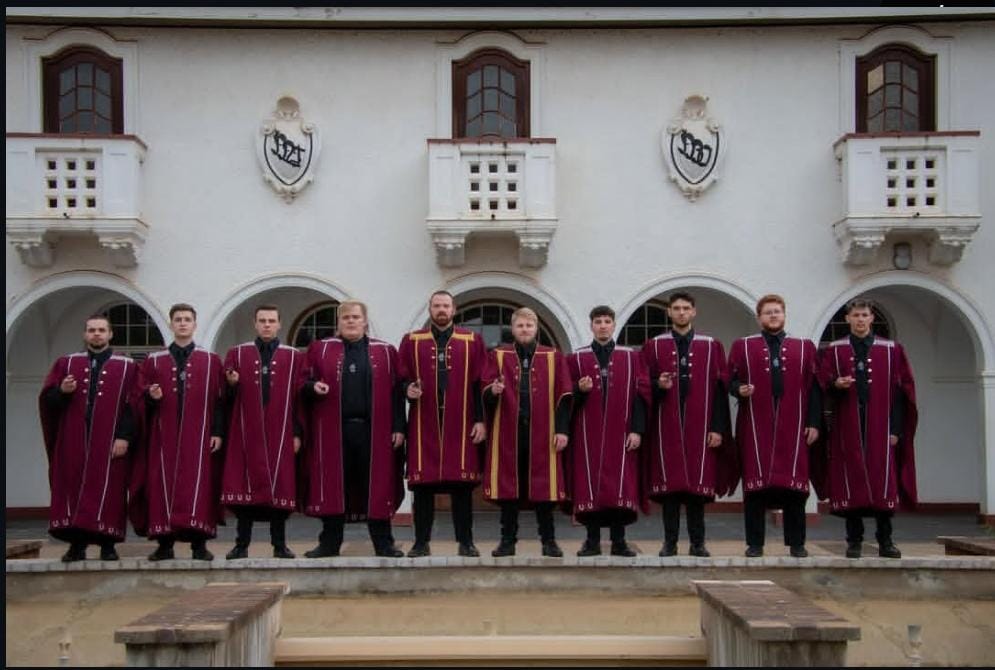
BEHIND THE CURTAIN: THE RIGOROUS PATH TO LEADING A RESIDENCE AT NWU
Chiara Dover
@chiaradoverr
The election of the House Committee (HC) is more than just a popularity contest; it’s a meticulous, multi-layered process designed to identify the next generation of student leaders. For those outside the system, the circuses can seem like a blur of campaigns and speeches. But what does it truly take to stand for a position, and how does the university ensure a fair and democratic election? We pulled back the curtain to reveal the engine room of student governance.
The journey begins long before the first campaign speech. Each potential candidate receives an official nomination form provided by the North-West University (NWU). However, ambition alone isn’t enough. A candidate’s eligibility is a collective endorsement, requiring nominations from two other residents. This initial step ensures that only those with demonstrable peer support proceed to the next stage.
The famed circuses are not a free-for-all; it’s a carefully structured event designed to balance thorough assessment with residential life. Each residence is presented with three distinct scenario options from which to choose. These can include formats like separating the circus for Primaria/Primarius and Deputy-Primaria/Primarius candidates from the general House Committee candidates, or spreading the activities across three dedicated days. The system is built with flexibility in mind, offering options to accommodate different house cultures. Furthermore, if the provided scenarios are unsuitable, the Primaria and Deputy Primaria can propose a better alternative by organising a meeting with Dr. Corrie Rheeder to formalise changes, ensuring every residence gets a fair hearing.
Is there a level playing field? The approach varies by residence. Some residencies enforce strict, clear boundaries — such as limiting each candidate to a specific time slot for their circuses to ensure fairness. Others grant more flexibility. The core of the assessment, however, remains consistent. Candidates face questions from a dedicated panel comprising the current Primaria/Primarius, Deputy Primaria/Primarius, a House Committee representative, and a residence representative. Following this, the floor is opened for general questions from all residents, testing candidates’ readiness under pressure from both peers and leaders.
Before the circuses even begin, the NWU acts as the ultimate gatekeeper. The university sifts through the candidates once the nominations lists are submitted, but approval is not automatic. The applicants can be disqualified if their academic results are too low or if they have a criminal record. This ensures that all candidates trying for leadership roles meet the university’s standards of academic standing and personal conduct.
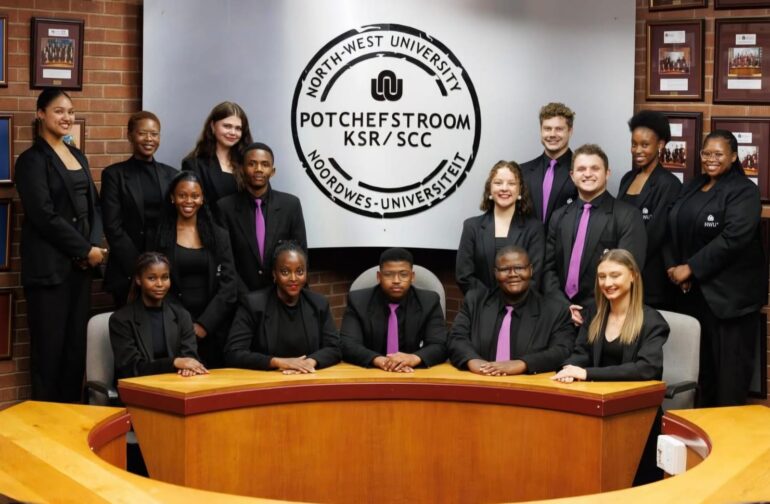
This year, the voting process itself underwent a significant upgrade, moving from eFundi to a specialised platform called QuestionPro. But the NWU’s involvement goes far beyond the software. The university has its own council, which includes Dr. Corrie Rheeder, to oversee the election’s integrity. A Student Campus Council (SCC) member is dispatched to each circus to act as an independent observer.
The commitment to fairness is multi-layered. Internal auditors scrutinise the votes to prevent any irregularities, and the residence’s House Parent must be present during the circuses. To cement accountability, every panel member signs a form, making them personally liable for any unfair practices. On the QuestionPro platform, results are displayed with transparency — similar to a Google Doc with a pie chart and precise vote counts — allowing for immediate cross-checking by panel members, though all data is kept strictly private.
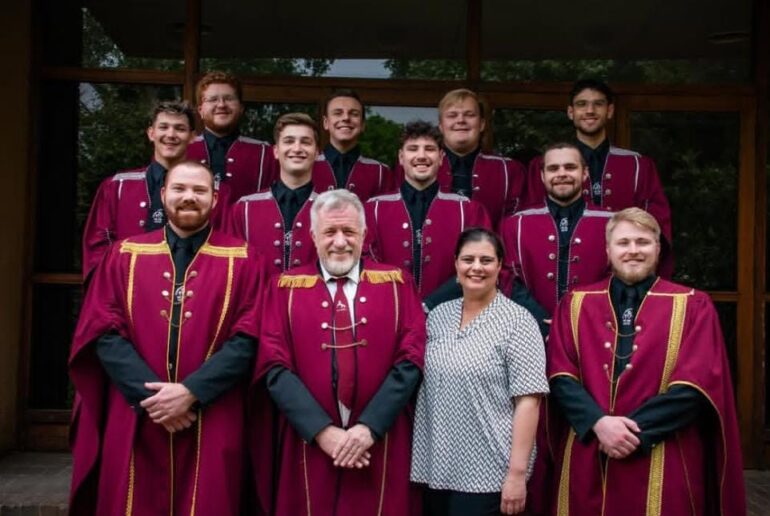
The election is a staggered democratic exercise. Residents vote separately for their Primaria/Primarius, Deputy- Primaria/Primarius, and, at most, 8 House Committee members separately. Results are announced the day after voting closes, but this is only the preliminary outcome. A designated period for objections follows, allowing for any concerns to be raised before the final HC is officially announced.
The process concludes with the new Primaria/Primarius, often with input from the Deputy- Primaria/Primarius, allocating specific portfolios to each HC member. This final step marks the beginning of their leadership journey, one that started with a nomination and was forged in the rigorous, transparent crucible of the NWU election process.
Edited by Kyle Bauermeister
Similar posts
Chart
-
-
-
 play_arrow
I Had Some Help (feat. Morgan Wallen) Post Malone
-
-
-
 play_arrow
Not Like Us Kendrick Lamar
-
-
Top popular

VARSITY CUP TICKET RESELLERS AND BUYERS – MAY BE DENIED ACCESS

UNANSWERED AND UNSPOKEN: NWU’S SILENCE ON SUSPENSION OF SCC STUDENT LEADER

NWU EXPELS STUDENT LEADER AFTER INTERNAL FINDING OF SEXUAL MISCONDUCT

MARCHING FOR JUSTICE AND POLICE ACCOUNTABILITY: THE TRUTH BEHIND THE TMM LOFTS PROTEST

DEGENAAR PRAAT OOR DIE NA-SKOK VAN ‘N TRAGEDIE


Post comments (0)