-
 play_arrow
PUKfm
-
 play_arrow
London Calling Podcast Yana Bolder
-
 play_arrow
Summer Festival Podcast Robot Heart
-
 play_arrow
Electronic Trends Podcast Aaron Mills
-
 play_arrow
New Year Eve Podcast Robot Heart
-
 play_arrow
Techno Podcast Robot Heart
-
 play_arrow
Flower Power Festival Podcast Robot Heart
-
 play_arrow
Tech House Podcast Robot Heart
-
 play_arrow
Winter Festival Podcast Robot Heart
music_note
THE DEVASTATING EFFECTS OF AI ON HUMAN LIFE

Awethu Khumalo
@awe2s_righttoe
Imagine being convicted of a crime you did not commit, but there is AI-generated evidence that says you did. Or imagine following an influencer on social media who inspires you, only to find out that they are not real and have been an AI model the whole time. AI has become so realistic that it has disrupted the fabric of our reality, leaving us uncertain about what is real anymore. Anyone can be impersonated, including politicians, celebrities, and even children.
Artificial intelligence (AI) has become a controversial topic of discussion over the last decade, with many arguing that it is revolutionary and will only continue to improve. But that is exactly what those who oppose AI fear: it is getting better. The technology constantly develops itself with every search, which means that over time it has become increasingly difficult to differentiate between AI and reality. It has infiltrated almost every aspect of human life, including music, art, dating, and the environment.
Over the past few years, there has been a growing trend of AI being used to generate covers of existing songs using the voices of other artists. At first, it was funny and entertaining. Meme pages made fictional characters sing popular songs in their own unique ways, but this took a dramatic turn when record labels started signing AI artists to cut corners. AI artists have the ability to replicate any voice combination and write lyrics within minutes. Record labels do not have to pay these “artists” royalties because they do not exist, allowing companies to keep all profits.
Another way AI has infiltrated human life is through art and dating. Many of us have seen advertisements across various social media platforms encouraging us to talk to an AI chatbot, where you can customise the AI’s appearance or create any type of image using a single word. There have even been viral social media trends where people try to “rizz up” a chatbot or generate entire photoshoots that never actually happened.
How did we get here? How did we reach a point where we prefer talking to a computer rather than an actual person? We enter these chat rooms with the perception that the bot responding to us is sentient and capable of replacing human connection. Thousands of people are losing their jobs because we have decided that AI-generated images are better than purchasing art that shows signs of human imperfection.
As with most technological and human developments, the environment is always on the receiving end. According to MIT News, each time a model is used, for example, when a student asks ChatGPT to summarise an essay, the computing hardware that performs those operations consumes around five times more electricity than a simple web search.
A data centre is a physical facility that stores computing machines and related hardware equipment, and such centres are essential for running AI operations. Beyond their electricity demands, they also require large amounts of water. These centres use chilled water to absorb heat from computing equipment, and MIT News has estimated that for each kilowatt-hour of energy a data centre consumes, it needs about two litres of water.
Robin Williams in the cult-classic movie Dead Poets Society said that words and ideas can change the world. But what happens when those words are generated by a computer? Do they have the same impact? How is it possible that art, music, love, writing, and poetry, everything that fills us with passion, can be programmed into a system? What happens when the disciplines that humanity has always taken pride in are suddenly replicated with a single prompt? Where does this leave our world?

Edited by Isabel Burgers
Chart
-
-
-
 play_arrow
I Had Some Help (feat. Morgan Wallen) Post Malone
-
-
-
 play_arrow
Not Like Us Kendrick Lamar
-
-
Top popular
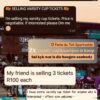
VARSITY CUP TICKET RESELLERS AND BUYERS – MAY BE DENIED ACCESS

UNANSWERED AND UNSPOKEN: NWU’S SILENCE ON SUSPENSION OF SCC STUDENT LEADER

NWU EXPELS STUDENT LEADER AFTER INTERNAL FINDING OF SEXUAL MISCONDUCT

MARCHING FOR JUSTICE AND POLICE ACCOUNTABILITY: THE TRUTH BEHIND THE TMM LOFTS PROTEST

DEGENAAR PRAAT OOR DIE NA-SKOK VAN ‘N TRAGEDIE

Post comments (0)