-
 play_arrow
PUKfm
-
 play_arrow
London Calling Podcast Yana Bolder
-
 play_arrow
Summer Festival Podcast Robot Heart
-
 play_arrow
Electronic Trends Podcast Aaron Mills
-
 play_arrow
New Year Eve Podcast Robot Heart
-
 play_arrow
Techno Podcast Robot Heart
-
 play_arrow
Flower Power Festival Podcast Robot Heart
-
 play_arrow
Tech House Podcast Robot Heart
-
 play_arrow
Winter Festival Podcast Robot Heart
music_note

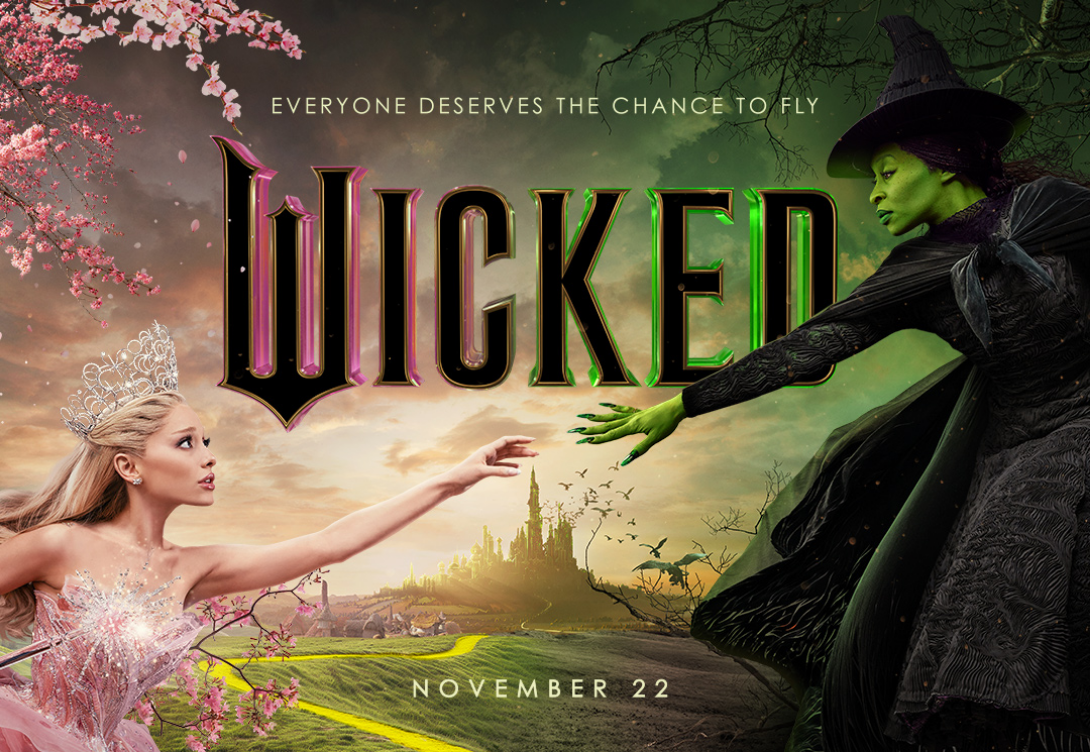
WICKED: HOW THE SONGS SHAPE THE STORY
Amari Maré
@amari.mare
Wicked, starring Ariana Grande as Galinda (later Glinda) and Cynthia Erivo as Elphaba, brings the beloved Broadway musical to the screen, using music as a powerful storytelling tool. The film explores how the Wicked Witch of the West came to be and reimagines the world of Oz by giving depth, motivation and humanity to characters long known only by their reputations.
Rather than simply retelling The Wizard of Oz, Wicked fills in emotional and narrative gaps left by the original story. Each song plays a crucial role in character development, revealing inner conflicts, relationships and themes such as power, identity, friendship and morality.
“No One Mourns the Wicked”
The opening number, “No One Mourns the Wicked,” sets the tone for the story. It depicts the public celebration following the death of the Wicked Witch. Galinda, now known as Glinda, reflects on her complicated friendship with Elphaba and poses the central question of the musical: Are people born wicked, or is wickedness thrust upon them?
“Dear Old Shiz”
The story then shifts into a flashback at Shiz University, where Galinda first meets Elphaba. The song establishes Shiz as a prestigious and traditional institution. Elphaba’s unexpected enrolment results in her becoming Galinda’s reluctant roommate, laying the groundwork for their tense but transformative relationship.
“The Wizard and I”
“The Wizard and I” functions as Elphaba’s classic “I Want” song. As defined in musical theatre, this type of song reveals a protagonist’s deepest desires. Elphaba dreams of meeting the Wizard of Oz, using her powers for good and finally being accepted. This moment invites the audience to empathise with her ambition and vulnerability.
“What Is This Feeling”
This energetic duet captures the early animosity between Galinda and Elphaba. Though framed as mutual dislike, the song cleverly hints at how their rivalry will eventually evolve into friendship. It introduces one of the film’s strongest themes: how opposites can challenge and ultimately shape one another.
“Something Bad”
In “Something Bad,” Elphaba becomes aware of the growing oppression of Animals when Doctor Dillamond, a goat and university professor, reveals that Animals are being silenced and stripped of their rights. This song marks Elphaba’s moral awakening and highlights the film’s political undertones.
“Dancing Through Life”
This number introduces Fiyero, whose carefree philosophy contrasts sharply with Elphaba’s seriousness. His belief that “nothing matters” reflects his charm and privilege. The song subtly foreshadows his future transformation and sets the stage for the emotional tension that will later develop between him, Galinda and Elphaba.
“Popular”
One of the musical’s most iconic songs, “Popular,” shows Galinda attempting to reinvent Elphaba according to her own understanding of social success. The song captures Galinda’s personality — superficial yet well-meaning — and marks a turning point in their friendship. Shortly after this moment, Galinda adopts the name Glinda, symbolising her new public identity.
“I’m Not That Girl”
This tender ballad reveals Elphaba’s unspoken feelings for Fiyero. Aware that his attention is directed toward Glinda, Elphaba resigns herself to the belief that she is unworthy of love. Director Jon M. Chu noted in interviews that the song was slowed down in the film to heighten its emotional impact compared to the stage version.
“One Short Day”
In “One Short Day,” Glinda and Elphaba visit the Emerald City. The song is light-hearted on the surface but subtly exposes the Wizard’s use of spectacle and propaganda. It also introduces important historical elements of Oz, including references to the ancient spell book.
“A Sentimental Man”
The Wizard performs “A Sentimental Man” in an attempt to present himself as benevolent and fatherly. While he tries to emotionally manipulate Elphaba, she begins to recognise his lack of true power, marking a shift in her perception of authority.
“Defying Gravity”
The film reaches its climax with “Defying Gravity,” Elphaba’s defining moment. She rejects the Wizard’s control and embraces her independence, even at the cost of being labelled “wicked.” The song represents her moral stand and transformation into the figure history will later misunderstand. Glinda and Elphaba’s ideological divide becomes clear, cementing their opposing paths.
Conclusion
Wicked: Part One concludes with Elphaba’s dramatic ascent, setting the stage for Wicked: For Good, which will further explore the consequences of truth, power and perception. Through its music, the film deepens each character’s journey and challenges audiences to reconsider the meaning of good and evil.
The soundtrack does more than entertain — it drives the narrative forward, offering emotional insight and reinforcing the story’s enduring themes.
Edited by Simoné de Witt
Chart
-
-
-
 play_arrow
I Had Some Help (feat. Morgan Wallen) Post Malone
-
-
-
 play_arrow
Not Like Us Kendrick Lamar
-
-
Top popular
VARSITY CUP TICKET RESELLERS AND BUYERS – MAY BE DENIED ACCESS

UNANSWERED AND UNSPOKEN: NWU’S SILENCE ON SUSPENSION OF SCC STUDENT LEADER

NWU EXPELS STUDENT LEADER AFTER INTERNAL FINDING OF SEXUAL MISCONDUCT

MARCHING FOR JUSTICE AND POLICE ACCOUNTABILITY: THE TRUTH BEHIND THE TMM LOFTS PROTEST

DEGENAAR PRAAT OOR DIE NA-SKOK VAN ‘N TRAGEDIE

Post comments (0)